

Journalists Strengthen Their Capacity to Report on SRHR, Driving Social Change in Zanzibar
76.2% of journalists possess a foundational level of understanding of Sexual and Reproductive Health and Rights (SRHR) indicating a broad base of awareness exists within the media landscape following TAMWA ZNZ intervention. Since 2022 TAMWA ZNZ has supported journalists to cover broader issues of SRHR. The 2023 baseline report on journalists’ understanding of Sexual and Reproductive Health and Rights (SRHR), conducted by TAMWA-ZNZ and TAMWA Tanzania Mainland in collaboration with the Wellspring Philanthropic Fund showed that 47.6% of journalists demonstrated a fair level of SRHR understanding, 23.8% showed good understanding, and 4.8% had excellent knowledge.
However, the report also highlighted a critical gap: 23.8% of journalists had low SRHR knowledge, signaling a need to strengthen capacity to improve the quality and accuracy of information shared with communities especially in rural and urban areas where access to reliable SRHR information is crucial for safeguarding the lives of women, young people, and children.
To respond to this need, TAMWA-ZNZ introduced a dedicated training program focused on SRHR reporting. The 2023 findings showed that 61.9% of journalists had never received any SRHR-related training, which affected their confidence in producing analytical, data-driven, and rights-based stories.
TAMWA-ZNZ conducted the first phase of the SRHR journalism training, involving 20 journalists, 20 TAMWA-ZNZ membersand 20 editors, media managers, and media owners.
The results were impressive. In 2023 alone, trained journalists produced 191 storiesacross newspapers, radio, television, and social media, all highlighting SRHR issues with improved professionalism, factual accuracy, gender sensitivity, and a human-rights approach.
In 2025, TAMWA-ZNZ delivered the second phase of training to another cohort comprising 45 journalists and TAMWA membersand30 editors and media proprietors
This phase produced even stronger outcomes, with 318 high-quality SRHR stories published. These stories covered diverse themes such as maternal and child health, cervical cancer, male involvement in reproductive health, youth-friendly services, menstrual hygiene management, nutrition, and gender equality.
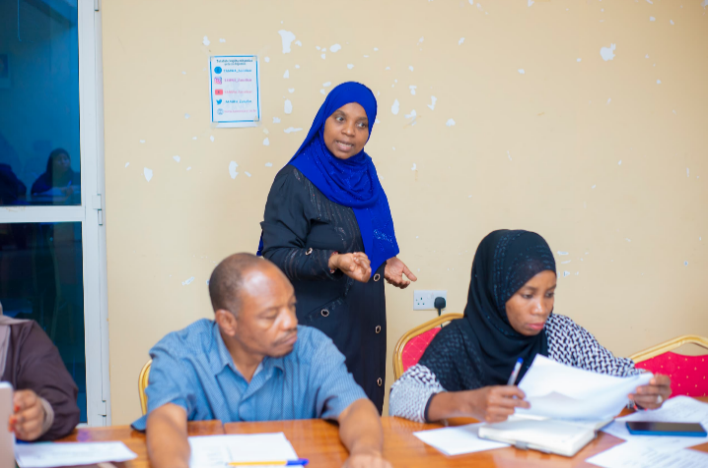
Some Journalists who attended in the SRHR training in Unguja and Pemba
The published stories did not merely highlight challenges they provided solutions, raised public awareness, and influenced policy and service delivery. One notable example is the case of Uzi Ng’ambwa, where in-depth reporting prompted immediate government action, including intervention by the Ministry of Health and the deployment of staff to ensure 24-hour health service availability.
Trainees from TAMWA–ZNZ have also continued to excel at the national level, making significant contributions to public understanding of SRHR. Huwaida Nassor Moh’d earned third place in the Radio Category of the Samia Kalamu Awards, an event organized byTAMWA Tanzania Mainland in collaboration with TCRA. Likewise, Najjat Omar secured first place in the Newspaper Category of the Safety Menstrual Hygiene Media Award, hosted by theMinistry of Healthtogether with theMenstrual Hygiene Coalition.
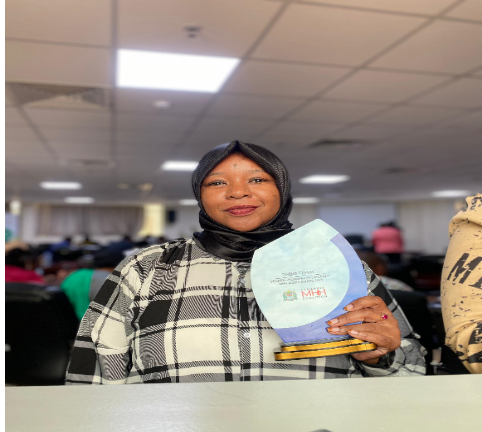
Najjat Omar a first winner during Safety Menstrual Hygiene Media Awards
Media outlets have also embraced their role as SRHR advocates. For instance, Assalaam FM partnered with the Rahaleo Youth Friendly Health Centre to promote behavioural and reproductive health education. Also Hamisi Nishani delivered SRHR training to the North “A” District Youth Council, strengthening youth engagement and awareness.
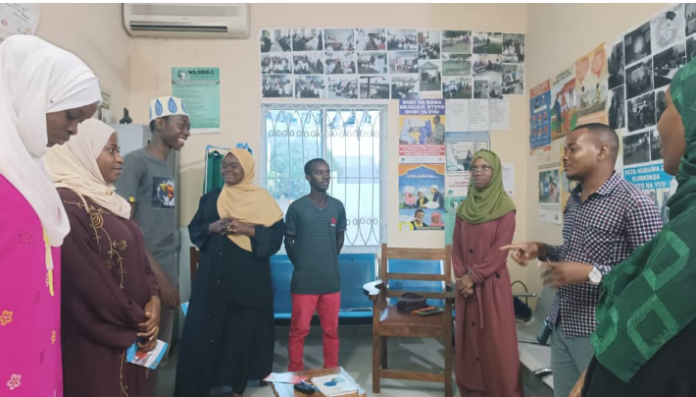
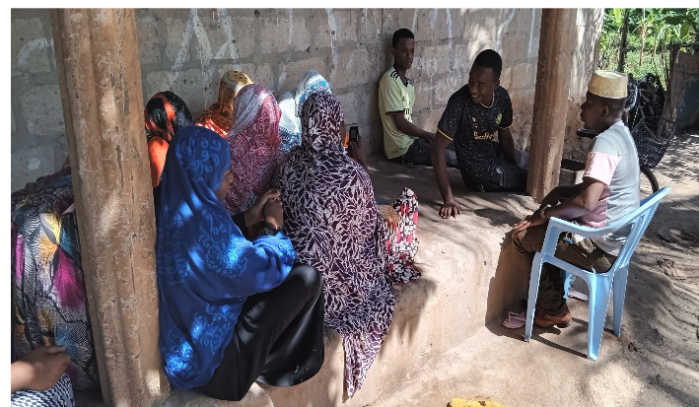
Some journalists provided the SRHR knowledge for young people at Rahaleo YFSC and North “A” Youth Council
This growing collaboration between media professionals and communities is enhancing public understanding of SRHR, empowering young people, and strengthening the role of the media as an agent of positive social transformation.
Despite these achievements, the SRHR initiative has faced several challenges, including, cultural norms that limit open discussions on reproductive health, limited media resources and capacity in some outlets, difficulty reaching marginalized or hard-to-reach groups and ensuring long-term behaviour change and sustainable access to SRHR services. Even so, innovative approaches and strong community partnerships have helped reinforce the positive outcomes of the project.
In conclude to that, TAMWA-ZNZ continues to demonstrate that high-quality SRHR journalism is essential in safeguarding reproductive rights and improving public health in Zanzibar. Through strengthened media capacity and impactful storytelling, journalists are emerging as influential champions of SRHR sparking informed dialogue, promoting accountability, and transforming lives, especially for women, girls, and young people across the islands.