


Story four :
ZanzAdapt Transforms Media Reporting and Amplifies Women’s Voices in Climate Action
Across Unguja and Pemba, women are emerging as strong leaders in climate adaptation, yet their voices have long gone unheard in mainstream media. The ZanzAdapt Project is changing this by equipping journalists, editors, and community advocates with the skills to highlight women’s climate leadership and strengthen gender-responsive storytelling across Zanzibar.
A cohort of 30 journalists trained 20 from Unguja and 10 in Pemba from community radios, newspapers, radio stations, TV, and online media. Through intensive training on gender-sensitive reporting and climate adaptation journalism, the cohort has produced 150 stories since the project began, greatly increasing public awareness of women’s roles in climate resilience.
The project also trained 58 women TOTs (29 Unguja, 29 Pemba) to engage with media and to use the social media plaforms to amplify their voices, which now confidently engage with the media and use social platforms such as Facebook, Instagram, and TikTok. Together, they have produced 20 climate adaptation contents, boosting the visibility of women leading environmental action in their communities.
To strengthen editorial support, 20 media editors participated in a workshop that emphasized gender-responsive reporting. Following their recommendations, ZanzAdapt conducted media visits across eight shehia, enabling journalists to gather real stories, engage with TOTs, and report on issues such as women’s land insecurity.
Trained journalists continued to publish feature articles, radio programs, TV segments, and social media content, while programs and articles producing increasingly featured women as key voices in climate discussions.
AMedia Gap Analysis conducted earlier in the project reviewed over 4,500 media items and found that only 1.1% featured women as leaders or experts in climate-related content. This revealed a major representation gap and shaped the ZanzAdapt training approach for journalists, editors, and TOTs.
By addressing these gaps, the project has significantly contributed to ensuring women’s voices are visible, valued, and central to climate resilience across Zanzibar.
ZanzAdapt Project promotes women’s leadership in climate change adaptation by preparing and producing radio and television programs, as well as strengthening the use of social media platforms to amplify women’s voices. This ensures that women are visible, valued, and recognized as key actors in climate resilience.
The success of the ZanzAdapt Project has been made possible through collaboration between Community Forest Pemba (CFP), Community Forests International (CFI) and Tanzania Media Womens Association, Zanzibar (TAMWA ZNZ), in collaboration with Global Affairs Canada. This partnership combined expertise in community-based climate adaptation, gender equality, and media engagement to strengthen women’s leadership and amplify their voices in climate action across Unguja and Pemba.
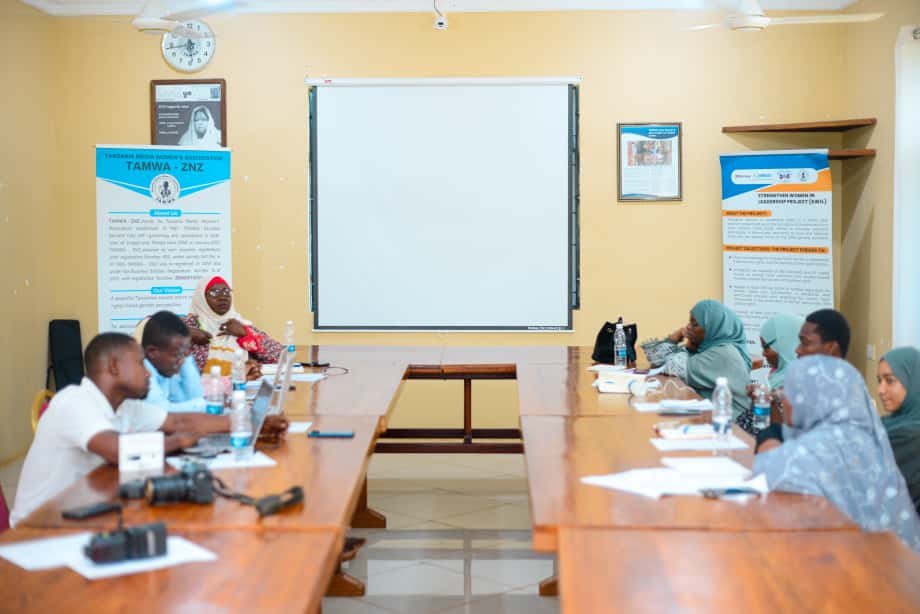
Stakeholders’ meeting with participants from civil society organizations (CSOs), government institutions, journalists, and editors from various media houses.
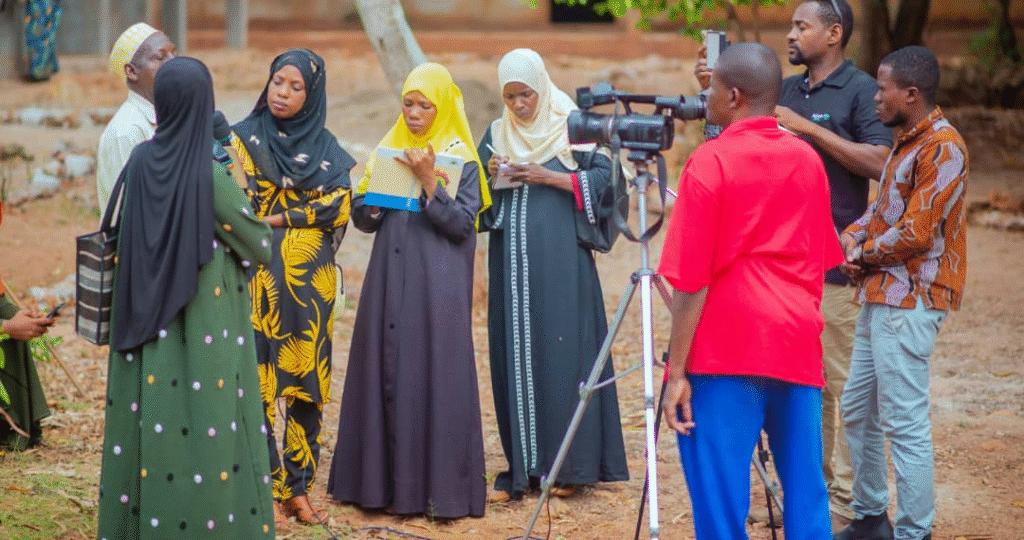
A cohort of journalists during a field visit to project shehias in Unguja.