

My Journey with TAMWA Zanzibar
Chairperson of the TAMWA Zanzibar Executive Committee,
Members of the Board,
Members of TAMWA Zanzibar,
Executive Management of TAMWA Zanzibar,
Distinguished Invited Guests,
Fellow Journalists,
Assalamu Alaikum.
If there is one group of people who are known for asking difficult questions, relentlessly pursuing
the truth, and yet often receiving little or no reward for their work, it is journalists. What is even
more remarkable is that these very individuals form the backbone of TAMWA–Zanzibar.
Dear journalists, I sincerely thank you for responding to our invitation to gather here today. For
me personally, this occasion is deeply meaningful, as it marks my formal farewell to the people of
Zanzibar and Tanzania at large after serving as the Director of TAMWA–Zanzibar for many years.
I thank you all most sincerely.
My Journey with TAMWA–Zanzibar
My direct engagement with TAMWA–Zanzibar officially began in 2002, at a time when TAMWA
was still one entity operating under a single registration. That year, TAMWA received a one-year
project on Violence Against Women and Children, coordinated by our sister Shifaa Said.
That project played a critical role in engaging many young journalists myself included and it was
through this engagement that I began to deeply understand issues affecting women and children. I
vividly remember how persistently I questioned violations of women’s and children’s rights
through my media outlet at the time, Nuru Newspaper.
In 2003, I formally joined TAMWA and later became a member of the Executive Board. When
the project ended, a proposal was made to close the Zanzibar office, which was then located in
Weles. Together with my colleague Ms. Nassra Mohammed, we stood firm and argued that the
progress achieved could not be reversed simply because a project had ended.
Convincing the Board was not easy. There were no resources to sustain the office. However,
through the wisdom of the Board and our commitment to personally oversee the office under these
difficult circumstances, we succeeded in keeping TAMWA–Zanzibar alive.
I would like to express my gratitude to the then Executive Director of TAMWA Mainland, Dr
Ananilea Nkya, Sister Shifaa, Ms. Nassra, and all Board members who stood with us during thiscritical moment. Uniquely, these individuals were more than just colleagues; they were my teachers and
mentors.
Struggles, Persistence, and Growth
The office continued operating under very challenging conditions. Around that time, I was
transferred to work at the President’s Office and later pursued my Master’s degree between 2004
and 2006.
In 2006, we were required to register TAMWA–ZNZ independently following changes in the
NGO law in 2002, which prohibited organizations from operating nationwide under a single
registration. Together with Ms. Nassra, we struggled tirelessly throughout that year to secure
registration.
At the same time, we were approached by CARE International to jointly develop a project
proposal. This presented another challenge. I had no prior experience in proposal writing or project
implementation. CARE had an expert from South Africa, while TAMWA’s “expert” was myself
completely inexperienced.
I had no choice but to learn. I spent hours in internet cafés, paying TZS 500 per session, studying
like a school child so as not to jeopardize our institution. Thankfully, in January 2007, we received
our registration, and later that year we were informed that our proposal with CARE had been
approved.
This led to the implementation of the Women Empowerment in Zanzibar (WEZA) project from
2008 to 2011 and my convention work at TAMWA, ZNZ taking unpaid leave from Government
service.
Building an Institution and a Movement
This new phase was driven by remarkable women who worked tirelessly and selflessly, including
Asha Abdi, Halima Msellem, Mwanakhamis Mrisho, and Jitihada Abdalla. Their commitment
contributed significantly to economic empowerment, leadership development, and social
transformation for women and children. It was also during this time that we began acquiring land
and constructing our current building here in Tunguu.
It was also in 2008 that my deep partnership with journalists truly began. Together, we embarked
on a long journey of building a strong institution in a society where patriarchy existed not only in
culture, but also within systems, laws, and formal structures.
This was not an easy journey. We faced resistance, resource constraints, misunderstandings, and
at times open hostility. We challenged harmful practices such as “dago”, where men abandon
women and children without responsibility. I recall receiving a call from a senior education official
accusing us of disrupting “acceptable social norms.”We confronted gender-based violence (GBV), sometimes facing friction with law enforcement as
well as intense resistance from religious leaders, particularly in relation to the Kadhi’s Court.
Where TAMWA–Zanzibar Stands Today
Today, TAMWA–Zanzibar stands as a strong, respected, and trusted institution with:
82 journalists from Unguja and Pemba as members;
23 skilled and dedicated staff;
Robust financial systems managed by CPA-certified accountants;
Annual financial, programmatic, and institutional reports publicly available online;
External audits conducted by firms registered with the National Board of Accountants and
Auditors.
This progress did not happen by chance. It is the result of solidarity, perseverance, and a shared
belief that gender justice is not a privilege, it is a fundamental right.
Our Collective Achievements
Working alongside journalists, communities, development partners, and institutions, we have:
Reached 11,120 women and persons with disabilities through 572 savings and loan groups,
transforming dependency into leadership and self-reliance;
Contributed to legal reforms addressing GBV, including:
o The Evidence Act No. 9 of 2016, allowing circumstantial evidence and single-
witness testimony, including from children;
o The Kadhi’s Court Act No. 9 of 2017, recognizing the division of matrimonial
property upon divorce;
o The Criminal Procedure Act No. 7 of 2018.
According to the 2025 National Bureau of Statistics Report, by 2024, 16% of GBV cases resulted
in imprisonment out of 1,809 reported cases, a significant shift from earlier years.
Contributed to increasing women’s political representation to nearly 35% across decision-
making levels;
Established Early Warning Systems on Political Violence Against Women in collaboration
with 47 CSOs;
Advocated against restrictive laws and defended media freedom and access to information;
Through the ZanzAdapt Project, transformed climate change reporting by producing 116
gender-responsive stories in one year;
Proudly acquired our own buildings, which also generate income through rentals.Gratitude
I extend my heartfelt appreciation to:
All past and present TAMWA–Zanzibar Boards, as well as TAMWA Mainland Boards;
The women and men of Zanzibar and Tanzania, who are the foundation of our work;
Civil society organizations at all levels;
Government institutions, particularly the Ministries responsible for Gender and
Information, the NGO Registrar, and the Office of the Chief Government Statistician;
Development partners, especially the Embassies of Denmark, Norway, European Union,
UNFPA, Internews, NED and UN Women;
Journalists—the heart, voice, and compass of this institution.
“I would like to extend my special gratitude to all TAMWA–Zanzibar staff members, many of
whom also served as TAMWA members. Building TAMWA–ZNZ was not an easy task. I am
aware that at times some of you endured significant personal sacrifices and continued working
despite your own challenges. I am also often told that I am not the easiest person to work with, yet
you endured and supported me and for that, I am deeply grateful for your love and patience.
Some of us have worked together for more than ten years, including Sister Asha Abdi, Mohammed
Ali (our driver), the Administration Officer Sister Zamoyoni Vuai, Mwanakhamis Mrisho, the
Chief Accountant Sister Khalda, among others. I also sincerely appreciate the management of
TAMWA–ZNZ, including the Programme Manager and now Executive Director, Sister Nairat;
the Head of Finance and Administration (HOFA); the M&E Specialist, Mohammed Khatibu; the
Head of Communications, Sister Sophia Ngalapi; Sister Fathiya Mussa, former Pemba
Coordinator; and Sister Tatu Mtumwa. Thank you all very much.”.
Family and Personal Sacrifice
My deepest gratitude goes to my family my children and my husband for their extraordinary
patience and support. There were times when TAMWA had no funds to pay even my modest
salary, particularly during 2012 and 2013, after the WEZA project ended. At that time, the
European Union was demanding final reports while my unpaid government contract had expired
creating intense pressure and uncertainty. I was forced to choose between returning to government
employment or continuing with TAMWA ZNZ. With the support of partners, friends, and family,
I chose the latter so that this wheel of positive change for women, children, and society could keep
turning.Handover of Leadership
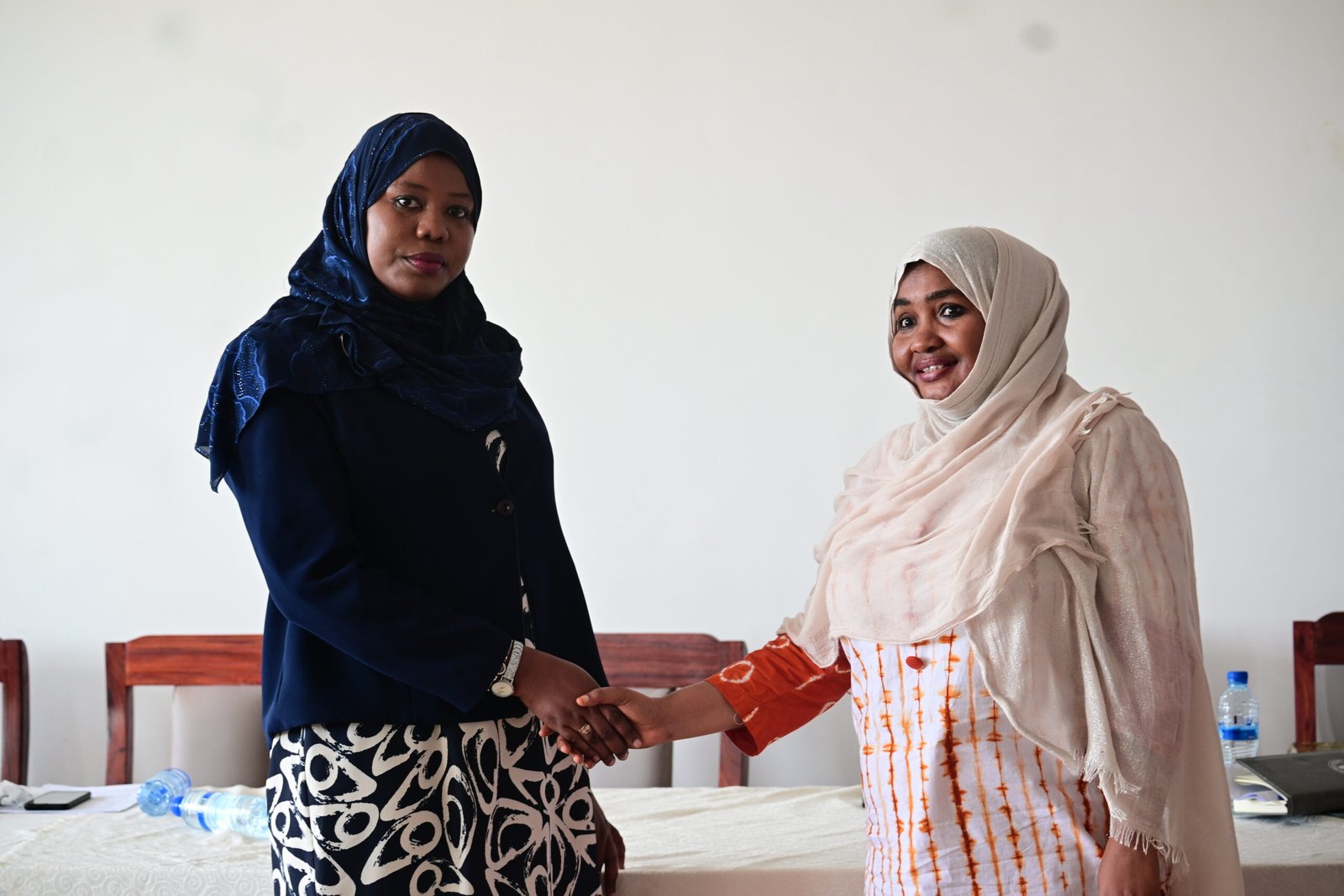
With humility and transparency, I officially announce that I have handed over my responsibilities
as Director of TAMWA–Zanzibar to Ms. Nairat Abdalla, a leader of integrity, discipline, and
vision.
I call upon journalists, members, partners, and the public to offer her the same and even greater
support that you gave me.
Strong institutions are not built by one person. They thrive when leadership changes, but the vision
remains constant.
Conclusion
I am not leaving the struggle.
I am not leaving the fight for justice and equality.
I am simply changing positions so that the institution may continue to grow, shine, and endure.
As any good journalist knows:
A story never ends it only changes its angle.
Thank you very much.
Outgoing Director, TAMWA ZNZ
Dr Mzuri Issa Ali